
Direct Thermal vs. Thermal Transfer Printing
What Is the Difference Between Direct Thermal and Thermal Transfer Printing?
Direct Thermal Vs. Thermal Transfer: What's the Difference?
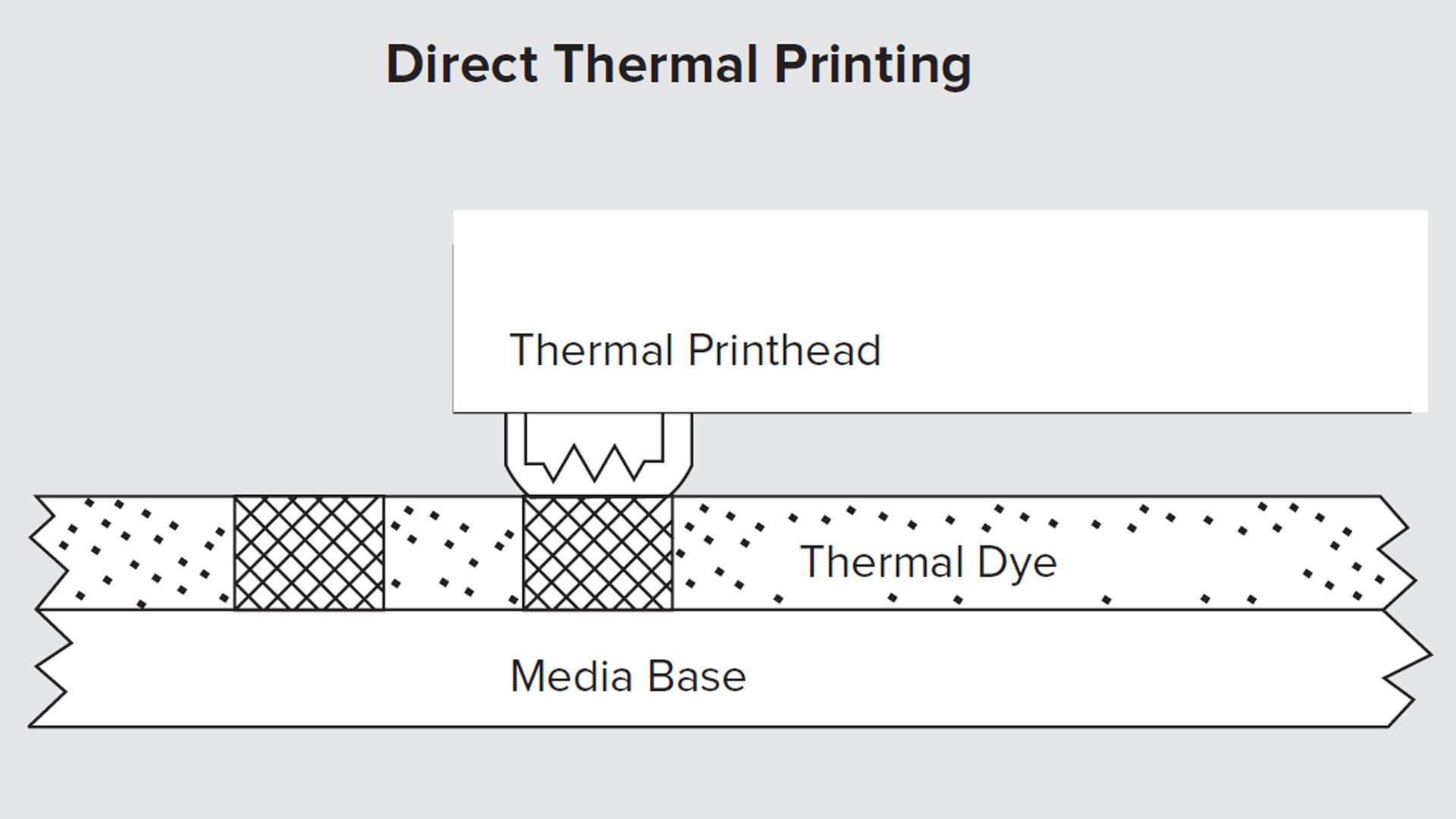
There are two thermal printing methods: direct thermal and thermal transfer. Each method uses a thermal printhead that applies heat to the surface being marked. Direct thermal printing uses chemically treated, heat-sensitive media that blackens when it passes under the thermal printhead, while thermal transfer printing uses a heated ribbon to produce durable, long-lasting images on a wide variety of materials.
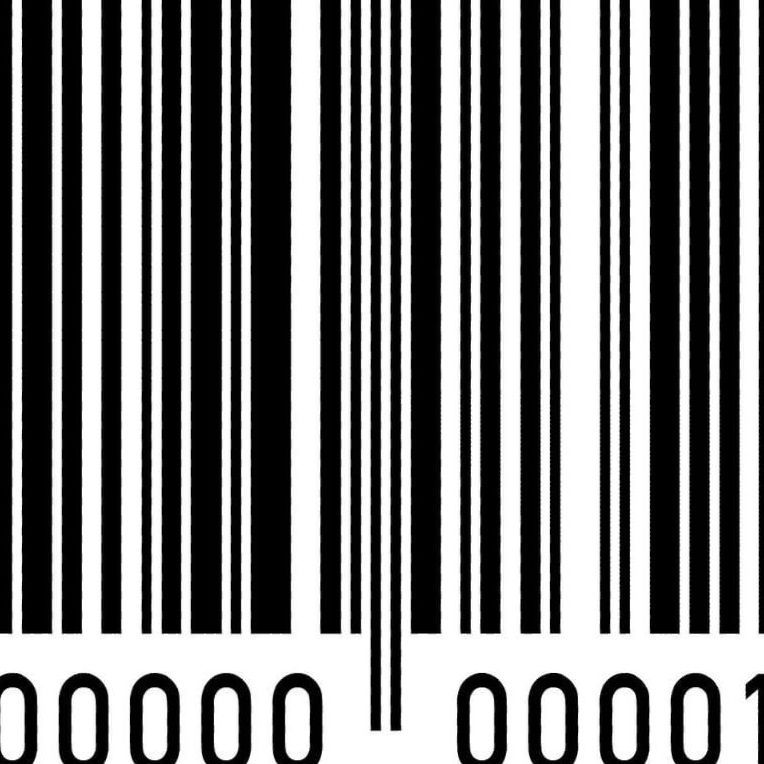
Overall thermal label printers are ideal for barcode labels because they produce accurate, high-quality images with excellent edge definition. Thermal transfer printers are engineered to print within tight tolerances and to produce the exact bar widths that successful barcode printing and scanning require. Each technology can produce one-dimensional and two-dimensional barcode symbologies, graphics, and text at the same print resolutions and speeds.
Direct Thermal Printing
Because they print without a ribbon, direct thermal printers are noted for their simplicity. Direct thermal printed labels typically have a considerable shelf life but are not well suited for environments that expose them to heat, long periods of direct sunlight, or abrasion. Direct thermal printers have no ink, toner, or ribbon.
If the label is overexposed to heat, light, or other catalysts, the material will darken and make the text or barcode unreadable. For these reasons, direct thermal printing is not used for lifetime identification applications. The readability of direct thermal labels, wristbands, and receipt papers varies greatly, depending on the usage conditions, but the technology provides ample lifespan for many common barcode printing applications including shipping labels, patient, and visitor identification, receipts, and ticket printing.
Direct Thermal Printing Advantages
- Direct thermal printing produces sharp, quality labels with good scannability.
- Direct thermal is ideal for applications requiring only a short shelf life — meaning the label image does not need to last very long. Shipping labels and receipts are ideal applications, for instance, while product labels are not.
- Direct thermal printers are simple to operate compared to most other print technologies because there is no ink, toner or ribbon to monitor or replenish.
- With no supplies to replace other than the material to be printed, long-term maintenance costs remain low.
- Direct thermal enables batch or single label printing with virtually no waste.
- With recyclable materials available, direct thermal printers offer environmental economy.
- Direct thermal printers are typically built more durably than dot matrix or laser printers, allowing reliable operation in industrial as well as office applications.
Direct thermal limitations
- Direct thermal printing is extremely sensitive to environmental conditions such as heat and light (fluorescent and/or direct sunlight).
- Direct thermal paper remains chemically active after printing. Because of this, thermal labels, tags or ticket stock are often top coated to resist UV light exposure, chemicals, and abrasion.
Thermal Transfer Printing
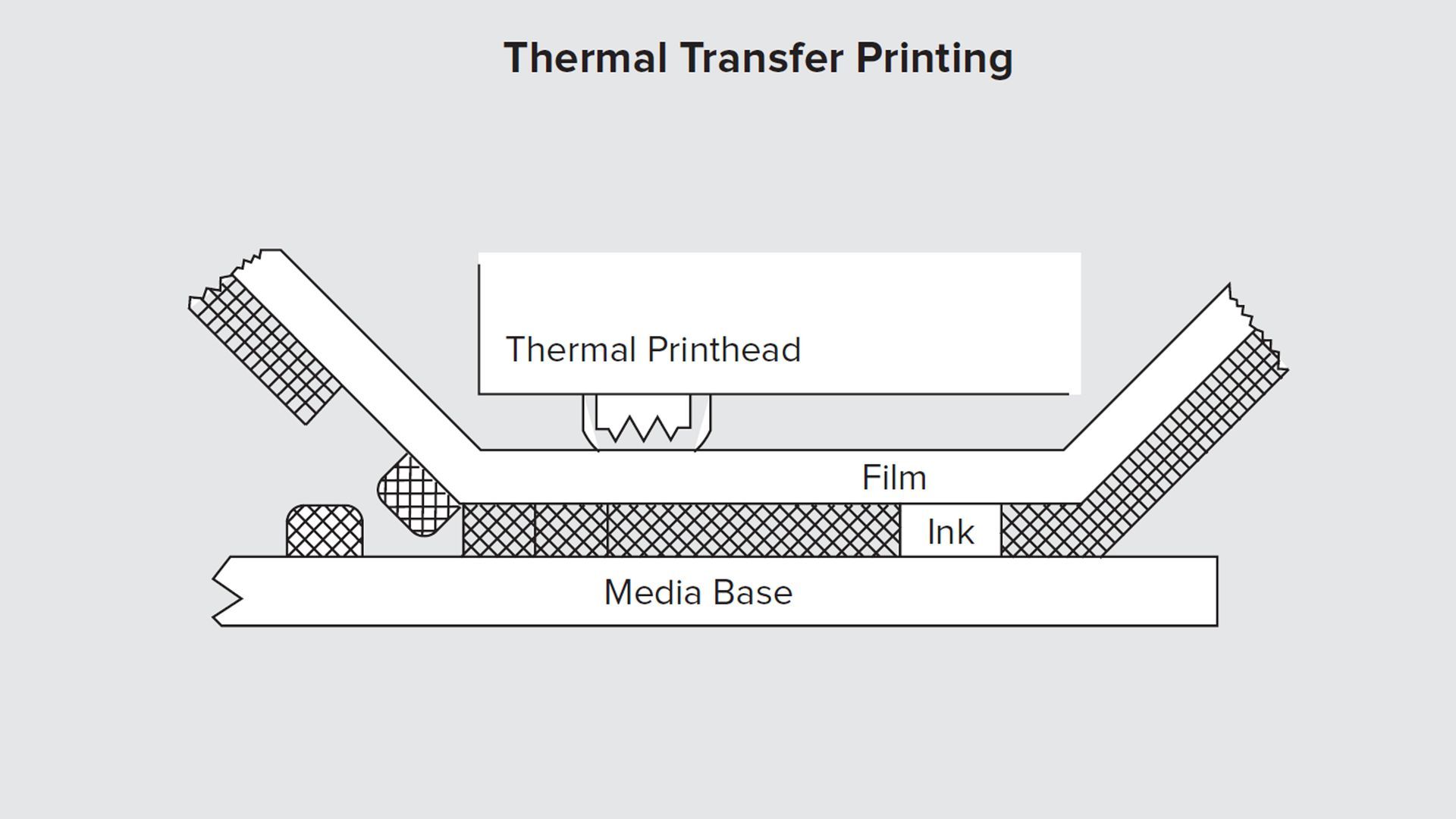
Thermal transfer printed labels are easily identified by the crisp, often glossy, printed surface. The clarity is achieved by using a thin ribbon roll that when heated by the printhead melts onto the label to form the image. The ink is absorbed so that the image becomes part of the media. When matched with suitable media, thermal transfer technology is not only impervious to heat and moisture, but the image cannot be rubbed off, making the printed labels the most durable available. An additional benefit of this technology is the continuity of the printed image. Because the color and density of the printed image is determined by the ribbon and the resolution of the printer, thermal transfer printing produces consistent, reliable printing on every label. This technique provides image quality and durability that is unmatched by other on-demand printing technologies.
The specific label material and ribbon must be carefully matched to ensure print performance and durability. By selecting the right media-ribbon combination, as well as specialty adhesives, users can create archival-quality labels to withstand temperature extremes, ultraviolet exposure, chemicals, sterilization, and more. Typical thermal transfer applications include: product identification; circuit board tracking; permanent identification; sample and file tracking; asset tagging; inventory identification; certification labels such as UL/CSA; laboratory specimens; cold storage and freezers; and outdoor applications.
Thermal Transfer Printing Advantages
- Thermal transfer delivers crisp, high-definition text, graphic, and barcode print quality for maximum readability and scannability.
- Thermal transfer printing produces long-life image stability.
- Thermal transfer enables batch or single label printing with virtually no waste.
- Long-term maintenance costs are low compared to dot matrix, ink jet, and laser printing.
- Thermal transfer technology can print on a nearly unlimited variety of media stock (except multi-form).
- Thermal transfer printers are typically built more durably than dot matrix or laser printers, allowing reliable operation in industrial as well as office applications
Thermal transfer printing limitations
- Since thermal transfer printers require ribbon, supply costs are higher than direct thermal; however, thermal transfer printheads last longer than direct thermal printheads.
- Single-pass thermal transfer ribbon can be wasteful if little is printed on it.
- Thermal transfer ribbon is a poor candidate for recycling.
- To obtain optimum print quality in thermal transfer printing, the ribbon, and media substrate MUST be compatible. Otherwise, the heat from the printhead could melt the ribbon onto the label causing internal printer problems.
More Information You May Like